
INTODICTION
Below is a detailed, original, and well-structured article of approximately 2000 words on the History of TikTok, written in clear English and suitable for blogs, websites, assignments, or SEO content.
History of TikTok: From a Startup App to a Global Cultural Phenomenon
TikTok is one of the most influential social media platforms of the 21st century. In a very short time, it has transformed how people create, consume, and share digital content. Known for its short-form videos, viral trends, and powerful algorithm, TikTok has reshaped entertainment, marketing, music, and online culture worldwide. This article explores the complete history of TikTok, from its early beginnings to its rise as a global digital giant.
Origins of TikTok: The Birth of ByteDance
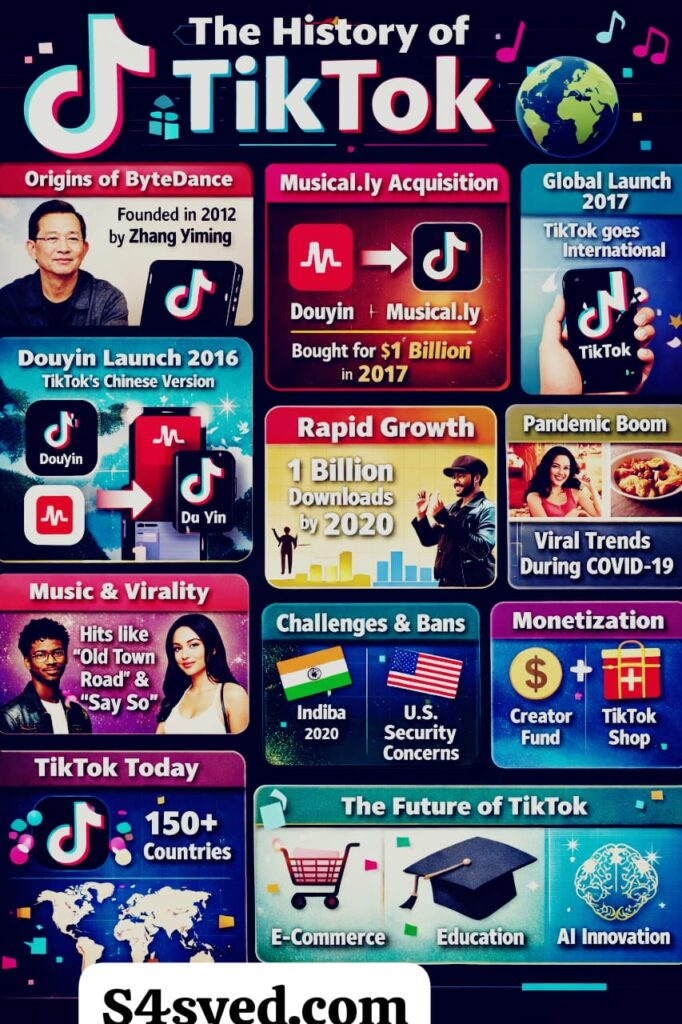
The story of TikTok begins in China with a technology company called ByteDance. ByteDance was founded in 2012 by Zhang Yiming, a Chinese entrepreneur and software engineer. The company’s mission was to use artificial intelligence to build platforms that deliver personalized content to users.
Before TikTok, ByteDance had already achieved success with a news aggregation app called Toutiao, which used AI algorithms to recommend news articles based on user behavior. This experience laid the foundation for ByteDance’s future products, especially TikTok.
Zhang Yiming believed that the future of the internet would be driven by short, engaging, and algorithm-based content, especially on mobile devices. This vision eventually led to the creation of TikTok.
Launch of Douyin: TikTok’s Chinese Version (2016)
AFTER 2016
In September 2016, ByteDance launched a short-video app in China called Douyin. Douyin allowed users to create and share short videos, usually set to music, with filters, effects, and editing tools and much more.
Douyin became an instant success in China. Within one year, it had gained over 100 million users, with billions of daily video views. Its success was driven by:
A powerful recommendation algorithm
Easy-to-use video editing features
Focus on creativity and entertainment
Mobile-first design
Although Douyin and TikTok look similar, they operate as separate platforms, with Douyin exclusively available in China and TikTok designed for international markets.
The Birth of TikTok for the Global Market (2017)
Recognizing the global potential of short-form video content, ByteDance launched TikTok for international users in September 2017. TikTok was essentially the global version of Douyin, but it was tailored to international audiences.
At first, TikTok struggled to gain attention in markets already dominated by platforms like Facebook, Instagram, Snapchat, and YouTube. However, ByteDance had a bold strategy to accelerate growth.
Acquisition of Musical.ly: A Turning Point (2017–2018)
One of the most important moments in TikTok’s history was ByteDance’s acquisition of Musical.ly in November 2017 for nearly $1 billion.
Musical.ly was a popular short-video app based in the United States, especially among teenagers.
countries
It allowed users (called “Musers”) to create lip-sync videos to popular songs. Musical.ly had a strong user base in:
The United States
Europe
Southeast Asia
In August 2018, ByteDance officially merged Musical.ly with TikTok. All Musical.ly accounts, followers, and content were transferred to TikTok.
This merger was a game-changer, instantly giving TikTok millions of active users and strong visibility in Western markets.
Rapid Global Growth and Popularity (2019–2020)
After the Musical.ly merger, TikTok’s growth exploded. By 2019, TikTok became one of the most downloaded apps in the world.
Key Reasons for TikTok’s Rapid Growth
Powerful Algorithm
TikTok’s “For You Page” (FYP) used artificial intelligence to recommend videos based on user interests, not follower count. This allowed even new users to go viral.
Short-Form Content
Videos were initially limited to 15 seconds, making them easy to watch and share.
Music Integration
TikTok partnered with major music labels, making it a major platform for music discovery.
Creative Tools
Filters, effects, transitions, and editing tools made content creation simple and fun.
Youth Appeal
TikTok became extremely popular among Gen Z and Millennials.
By 2020, TikTok had crossed 1 billion global downloads.
TikTok During the COVID-19 Pandemic
The COVID-19 pandemic played a major role in TikTok’s success. During lockdowns, millions of people turned to TikTok for entertainment, creativity, and social connection.
Popular trends during this period included:
Dance challenges
Comedy skits
Cooking and recipe videos
Fitness routines
Educational content
TikTok became more than just an entertainment app—it became a platform for learning, expression, and community building.
Expansion Beyond Entertainment
As TikTok matured, it expanded into various content categories, including:
Education (TikTok Learn)
Business and marketing
Health and fitness
News and awareness
Religious and motivational content
The hashtag #LearnOnTikTok gained billions of views, proving that TikTok could be both entertaining and informative.
TikTok and the Music Industry
TikTok has had a massive impact on the global music industry. Many songs became viral hits after trending on TikTok, even if they were old or previously unknown.
Artists who gained popularity through TikTok include:
Lil Nas X
Doja Cat
Olivia Rodrigo
BTS
Record labels now use TikTok as a key marketing platform, and chart rankings are often influenced by TikTok trends.
Monetization and Creator Economy
To support content creators, TikTok introduced several monetization features:
TikTok Creator Fund
LIVE Gifts and Diamonds
Brand partnerships and sponsorships
TikTok Shop
These features helped create a new digital economy, allowing influencers and small businesses to earn income directly from the platform.
Controversies and Government Challenges
Despite its success, TikTok has faced several controversies, especially related to data privacy and national security.
Major Challenges
Concerns about user data being accessed by the Chinese government
Temporary bans in countries like India (2020)
Legal battles and government scrutiny in the United States and Europe
In response, TikTok increased transparency, opened data centers outside China, and introduced stronger privacy controls.
TikTok Today: A Global Social Media Giant
As of the mid-2020s, TikTok has:
Over 1 billion monthly active users
Presence in more than 150 countries
Support for 75+ languages
TikTok is now a major competitor to platforms like Instagram Reels, YouTube Shorts, and Snapchat Spotlight.
The Future of TikTok
TikTok continues to evolve by introducing longer videos, e-commerce features, AI-powered tools, and advanced advertising solutions.
Potential future directions include:
Stronger focus on education
Expansion of TikTok Shop globally
Enhanced creator monetization
Improved safety and privacy measures
Despite challenges, TikTok’s influence on digital culture is undeniable.
Conclusion
The history of TikTok is a story of innovation, strategy, and cultural transformation. From its beginnings as Douyin in China to becoming a global phenomenon, TikTok has redefined how people interact with content online.
With its powerful algorithm, creative freedom, and massive user base, TikTok has changed social media forever. Whether for entertainment, education, or business, TikTok has become an essential part of modern digital life—and i

Leave a Reply