
INTRODECTION
Snapchat is one of the most influential social media platforms of the 21st century. Known for its disappearing messages, creative filters, and focus on real-time communication, Snapchat changed how people—especially young users—interact online. Unlike traditional social media platforms that emphasize permanent posts and public visibility, Snapchat introduced a new concept: temporary, personal, and playful communication. This essay explores the history of Snapchat, from its creation to its growth, challenges, innovations, and impact on modern digital culture.
Origins of Snapchat
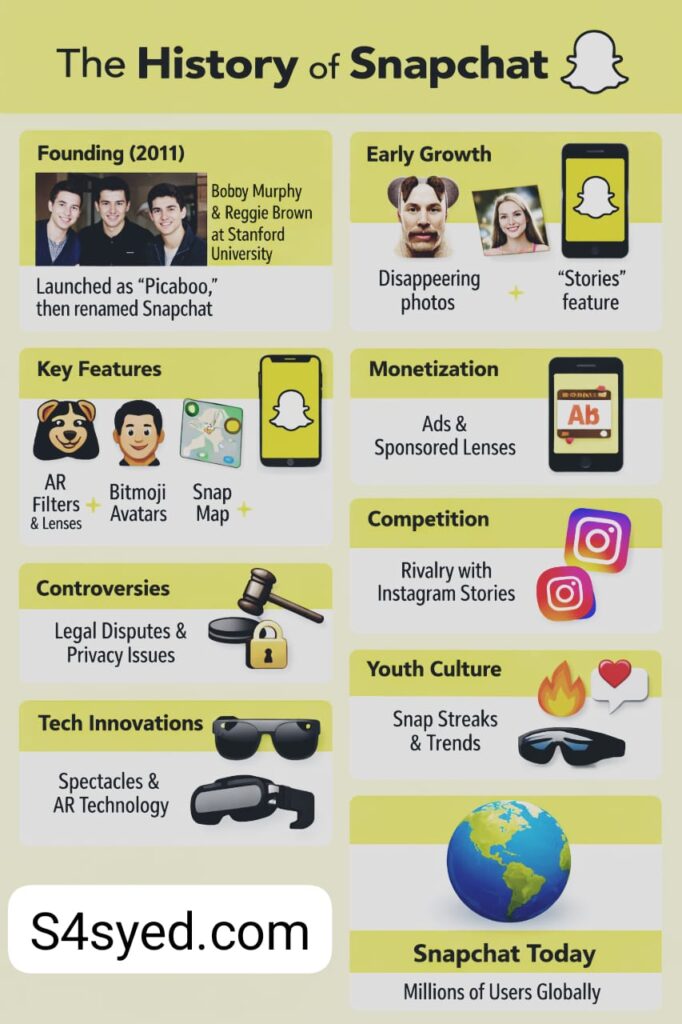
Snapchat was founded in 2011 by Evan Spiegel, Bobby Murphy, and Reggie Brown, who were students at Stanford University in the United States. The original idea behind Snapchat was simple but revolutionary: messages that disappear after being viewed. Reggie Brown initially proposed the concept of a photo-sharing app where images would automatically delete themselves, allowing users to share moments without worrying about permanent digital records.
The first version of the app was called “Picaboo.” It allowed users to send photos that vanished after a few seconds. However, after disagreements among the founders, Reggie Brown was removed from the company, and the app was renamed Snapchat. Despite this controversy, the app continued to grow rapidly.
ALL THE BEST TIME
At the time, most social media platforms such as Facebook and Instagram focused on storing memories permanently. Snapchat challenged this idea by encouraging spontaneous, unfiltered sharing. This made it especially popular among teenagers and young adults who wanted more privacy and freedom online.
Early Growth and Popularity
Snapchat was officially launched on the Apple App Store in September 2011. At first, the app gained attention mainly among college students. Word of mouth played a major role in its early success. Users enjoyed the novelty of sending photos that disappeared, which made communication feel more authentic and less pressured.
BY 2012
By 2012, Snapchat users were sending millions of snaps per day. One of the major reasons for its popularity was the sense of urgency it created. Since snaps disappeared after a few seconds, users felt encouraged to check the app frequently so they would not miss anything.
Another important feature introduced during this period was “Stories.” Launched in 2013, Snapchat Stories allowed users to post photos and videos that stayed visible for 24 hours. This feature became extremely popular and later influenced other platforms such as Instagram, Facebook, and WhatsApp, which adopted similar story features.
Unique Features and Innovations
Snapchat stood out because of its continuous innovation. Unlike many platforms that focused only on text or static images, Snapchat emphasized creativity and interaction.
Disappearing Messages
The core feature of Snapchat is its disappearing content. Snaps can last from one to ten seconds before disappearing forever. This design promotes honest and casual communication, as users feel less pressure to be perfect.
Filters and Lenses
In 2015, Snapchat introduced
augmented reality (AR) filters and lenses. These allowed users to add fun effects to their faces, such as dog ears, flower crowns, and face-swapping. These filters became a cultural phenomenon and significantly increased user engagement.
Bitmoji Integration
Snapchat later integrated Bitmoji, personalized cartoon avatars that represent users. This added a new layer of identity and expression within the app and strengthened user attachment.
Snap Map
The Snap Map feature allows users to share their location with friends in real time. It also lets users explore snaps from different parts of the world, turning Snapchat into a global discovery platform.
Business Model and Monetization
Initially, Snapchat struggled to find a profitable business model. Unlike Facebook or Google, Snapchat did not rely heavily on traditional banner ads. However, over time, it developed innovative advertising strategies.
Advertisements
Snapchat introduced vertical video ads that appear between stories. These ads are designed to blend naturally into the user experience and are often interactive.
Sponsored Filters and Lenses
Brands can create sponsored filters and lenses, allowing users to engage with advertisements in a fun and creative way. This proved to be a successful marketing strategy, especially for major events, movies, and product launches.
Discover Section
The Discover section features content from media companies, news outlets, and influencers. This section generates revenue through partnerships and advertising while providing users with curated content.
Competition and Challenges
Despite its success, Snapchat has faced intense competition, especially from Instagram, which is owned by Facebook (now Meta). When Instagram introduced Stories in 2016, many users felt it was a direct copy of Snapchat’s most popular feature.
As a result, Snapchat experienced slower growth at times. Some users preferred Instagram because it offered similar features along with a larger social network. However, Snapchat remained popular among younger users, particularly teenagers.
Snapchat has also faced technical and design challenges. In 2018, a major redesign of the app was met with backlash from users, including celebrities. Many complained that the new layout was confusing. Snapchat later made adjustments in response to user feedback.
Legal Issues and Controversies
Snapchat has faced several legal and ethical challenges throughout its history.
One of the most notable controversies involved the lawsuit filed by Reggie Brown, who claimed he was unfairly removed from the company. In 2014, Snapchat settled the lawsuit and reportedly paid Brown a significant amount of money.
Privacy concerns have also been an issue. Although Snapchat promotes disappearing messages, users later discovered that some data could be recovered. This raised questions about data security and user trust.
Additionally, Snapchat has faced criticism regarding cyberbullying, inappropriate content, and the mental health impact of social media on young users. The company has since introduced safety features such as reporting tools, content moderation, and parental controls.
Role in Youth Culture
Snapchat has played a major role in shaping modern youth culture. It introduced new ways of communicating, including visual language, emojis, stickers, and short videos. Terms like “snap streaks” became part of everyday vocabulary.
Snap Streaks
Snap streaks encourage users to send snaps to each other daily. This feature increases engagement and creates a sense of commitment among friends. While popular, it has also been criticized for encouraging excessive screen time.
Influence on Communication
Snapchat changed how people express themselves online. Instead of long text messages, users communicate through photos, videos, and creative visuals. This has influenced how other platforms design their messaging systems.
Technological Advancements
Snapchat has been at the forefront of technological innovation, especially in augmented reality. The company has invested heavily in AR research and development.
Snapchat also launched Spectacles, smart glasses that allow users to record short videos from their point of view. Although not a major commercial success, Spectacles demonstrated Snapchat’s interest in wearable technology and the future of immersive media.
The platform has also improved its artificial intelligence systems to enhance filters, recommend content, and detect harmful behavior.
Snapchat Today
Today, Snapchat is owned by Snap Inc., a publicly traded company. It has hundreds of millions of active users worldwide, with a strong presence in North America, Europe, and parts of Asia.
Snapchat continues to focus on private communication rather than public posting. Unlike platforms such as TikTok or Instagram, Snapchat emphasizes close friendships and real-time interaction.
The company continues to update the app with new features, including improved video tools, AI-powered lenses, and expanded creator support.
Impact on Social Media Industry
Snapchat’s influence on the social media industry is undeniable. Many of its features—such as Stories, filters, and disappearing messages—have been copied by other platforms. This shows how innovative ideas can reshape entire industries.
Snapchat also challenged the idea that social media content must be permanent. By promoting temporary content, it changed user expectations and behaviors online.
Conclusion
The history of Snapchat is a story of innovation, creativity, and transformation. From a simple idea developed by college students to a global social media platform, Snapchat has significantly influenced how people communicate in the digital age. Despite facing competition, controversies, and challenges, Snapchat has remained relevant by focusing on its core values: spontaneity, privacy, and self-expression.
Snapchat is more than just a social media app; it is a cultural phenomenon that reshaped online communication. Its emphasis on real moments over perfect images continues to attract millions of users worldwide. As technology evolves, Snapchat is likely to remain an important player in shaping the future of digital interaction
